This is the video recording of the May 26th Weekly Town Hall w/ Willie Delwiche.
05/26/22 2:00 PM ET [Read more…]
Expert technical analysis of financial markets by JC Parets
This is the video recording of the May 26th Weekly Town Hall w/ Willie Delwiche.
05/26/22 2:00 PM ET [Read more…]
From the desk of Willie Delwiche.
The minutes from the May FOMC meeting were released this week, leading to renewed “will they or won’t they” discussions about potential rate hikes later this year.
I’m old enough to remember when FOMC minutes weren’t really a thing. I liked it better then. I also preferred when Fed officials (both Board Governors and Regional Bank Presidents) were rarely seen, and even more scarcely heard. But I digress…
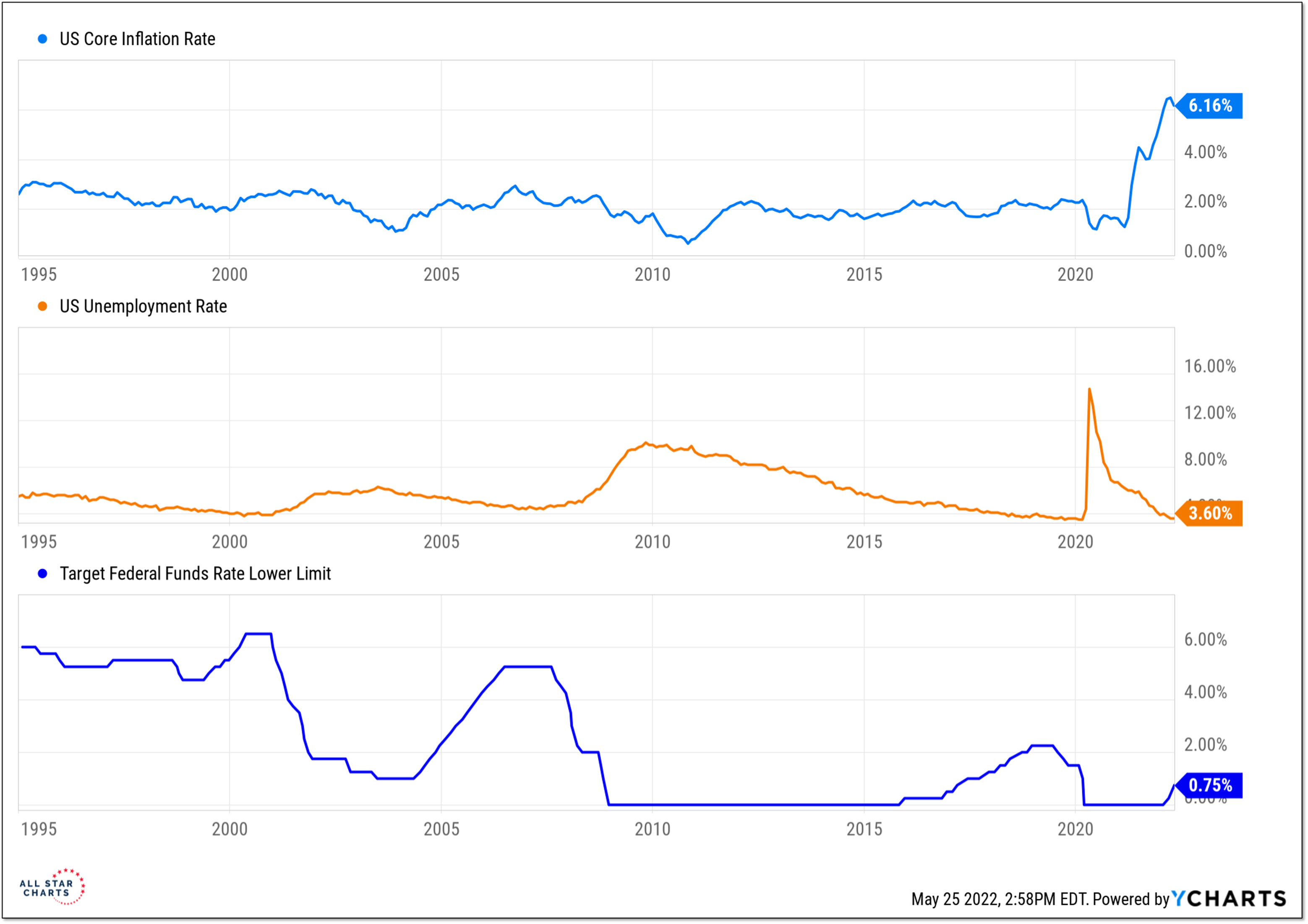
When thinking about where rates have gone in the past and where they could go in the future, it’s helpful to remember the context of the Fed’s dual mandate (stable prices and full employment). The last three tightening cycles all began with lower inflation & higher unemployment rates than we have now.
From the desk of Louis Sykes @haumicharts
“WAGMI,” we’ve all heard it.
Short for “we’re all going to make it,” it’s the mantra of crypto natives that paints an image of a better future.
As positive as this group expression may seem, it can also be viewed from the lens of a profound juxtaposition.
At its roots, WAGMI represents a deep contrast between the message of hope and the tragic reality of the lives of crypto natives.
For this week’s trade, we’re buying a $CVX October 180/200 Bull Call Spread for approximately $6.50 here. This means we’re long the 180 calls and short an equal amount of the 200 calls for a net debit.
Get the full details, risk management procedures and targets for this trade here:
From the desk of Steve Strazza @Sstrazza
Welcome to the 2 to 100 Club.
As many of you know, something we’ve been working on internally is using various bottom-up tools and scans to complement our top-down approach. It’s really been working for us!
One way we’re doing this is by identifying the strongest growth stocks as they climb the market-cap ladder from small- to mid- to large- and, ultimately, to mega-cap status (over $200B).
Once they graduate from small-cap to mid-cap status (over $2B), they come on our radar. Likewise, when they surpass the roughly $30B mark, they roll off our list.
But the scan doesn’t just end there.
We only want to look at the strongest growth industries in the market, as that is typically where these potential 50-baggers come from.
Some of the best performers in recent decades – stocks like Priceline, Amazon, Netflix, Salesforce, and myriad others – would have been on this list at some point during their journey to becoming the market behemoths they are today.
When you look at the stocks in our table, you’ll notice we’re only focused on Technology and Growth industry groups such as Software, Semiconductors, Online Retail, Solar, etc.
Then, like any good technician, we filter the list down to those closest to new highs.
This allows the cream of these strong groups to rise to the top and helps streamline our mission to identify technical breakouts in the top-performing stocks.
From the desk of Willie Delwiche.
Key Takeaway: Fear and concern are at the tip of every investor’s tongue, yet their eyes remain on the market. For all the pessimism suggested by sentiment surveys, there’s still a great deal of hope as the desperate search for the bottom continues. Yes, put call ratios are on the rise but that’s mostly driven by falling call activity as last year’s speculative exuberance evaporates. Also, investors continue to favor equities over more defensive assets such as bonds and cash despite what they say. Caution remains warranted until attitudes change or market participants are forced to avert their gaze out of disgust. After we see evidence of improved price action (and likely a series of breadth thrusts), accumulated pessimism becomes fuel for a rally, but the timing of that turn is anybody’s guess at this point.
Sentiment Report Chart of the Week: Contrarian Positioning Is To Go Long Bonds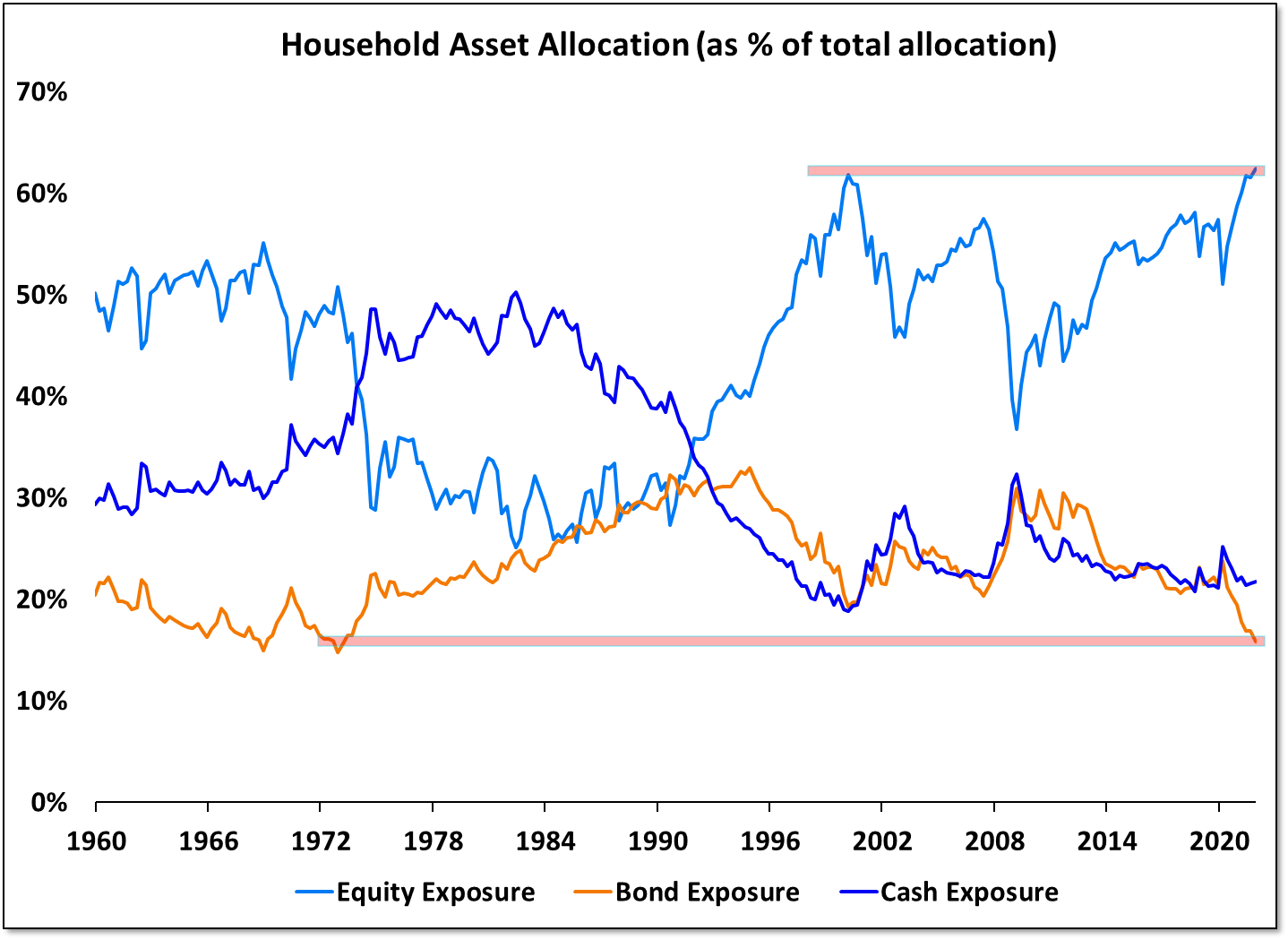
With all the focus on sentiment indicators, it seems like being a contrarian right now is all the rage. The problem with this approach is that while investors say they are pessimistic about stocks (and the economy), their positioning tells a different story. Household equity exposure was at an all-time high coming into 2021 and despite weakness in stocks this year, equity ETF’s have continued to see inflows. Even target date funds (a popular choice for passive investors) have been increasing equity exposure in recent years. It’s a different story for bonds. As dark as the mood has been on equities, it’s been even worse for fixed income and this sentiment is actually reflected in positioning. Coming into this year, household exposure to bonds was its lowest since the early 1970’s. With yields having risen to and now pulling back from well-tested resistance as concerns about economic deterioration rise, the contrarian call might not have anything to do with stocks. It might be to go long bonds.
From the desk of Steven Strazza @Sstrazza and Ian Culley @IanCulley
The US dollar is front and center as risk assets hang in the balance.
Earlier in the month, we placed the Australian and Canadian dollars on breakdown alert as they completed major topping patterns.
US dollar strength was expanding at the time, and the AUD and CAD were the last dominos to fall.
Or so it seemed.
What started as strong downside resolutions for these top commodity currencies quickly turned into potential failed breakdowns.
Now that the most resilient currencies are snapping back against King Dollar, it’s compromising the broad US dollar rally and could usher in a more favorable environment for risk assets.
Let’s discuss what it means for stocks and commodities if these failed breakdowns resolve higher.


